Showing posts with label Research. Show all posts

Monday, 12 February 2018

Certificate rating

Under the BBFC (British Board of Film Classification), we would rate our film a 15. This means that only people over the ages of 15 are allowed to watch the film. We decided this after reading the guidelines set by the BBFC and found that it didn't quite fit into the 12 category so 15 was the best option. This is justified by the BBFC guidelines that state:
  • The work as a whole must not endorse discriminatory language or behaviour, although there may be racist, homophobic or other discriminatory themes and language. 
  • Violence may be strong but should not dwell on the infliction of pain or injury.
  •  There may be strong threat and horror. 
  • Sexual activity may be portrayed, but usually without strong detail.
  • There may be strong language. Very strong language may be permitted, depending on the manner in which it is used
  •  Dangerous behaviour (for example, hanging, suicide and self-harming) should not dwell on detail which could be copied. 
  • Drug taking may be shown but the work as a whole must not promote or encourage drug misuse. 
Under the MPAA (Motion Picture Association of America), our film would be rated R which means Restricted. This requires that anyone under 17 needs an accompanying parent or adult guardian. Contains some adult material. Parents are urged to learn more about the film before taking their young children with them. This is Justified by the MPAA guidelines that state:
  • Violence can be both intense and persistent.
  • Multiple occurrences of bad language may be used.
  • Drug use content is restricted to PG-13 and above.
  • Nudity is restricted to PG and above, and anything that constitutes more than brief nudity will require at least a PG-13 rating. Nudity that is sexually oriented will generally require an R rating.
  • Not have any explicit criteria for sexual content other than excluding sex scenes from G rated films.

Thursday, 18 January 2018

Iconic Directors

Fritz Lang


Fritz Lang created Metropolis in 1927. This was the first film in the science fiction genre and set the foundation for science fiction films to come.  Metropolis is set in a futuristic urban dystopia and follows the attempts of Freder to overcome the vast gulf separating the classes of their city. The film features many of the conventions seen in dystopian films today.


Stanley Kubrick


Kubrick has created many iconic films including The Shining and Eyes Wide Shut. However his adaptation of A Clockwork Orange is iconic within the dystopian genre. He created a dystopian future in Britain with artificial lakes and elevated walkways. The film explores free will within humanity. He is frequently cited as one of the greatest and most influential directors in cinematic history. His films, which are mostly adaptations of novels or short stories, cover a wide range of genres, and are noted for their realism, dark humour and unique cinematography.

Ridley Scott


Ridley Scott has created many iconic science fiction films one of which was Alien. However Blade Runner has set him apart as an iconic dystopian film director. The film examines the impact of technology on human society and existence.  This film was the first to incorporate conventions from film noir, its dark style and futuristic design influenced films, television and video games to come.Scott's work has an atmospheric, highly concentrated visual style. Though his films range widely in setting and period, they frequently showcase memorable imagery of urban environments.


Thursday, 11 January 2018

Iconography

Iconography is an important aspect of genre. We expect to see certain objects on screen when we see a particular genre. For example in a dystopian genre you would expect to see futuristic technology, something that is falling apart with the world or there is something wrong with the world like a disease. It may also make you think of all the different special effects that are used to create the dystopian feel. A lot of the time dystopian films are also sci-fi films so in a lot of dystopian films you could expect to see space elements like aliens and planets.


Wednesday, 10 January 2018

Iconic sounds

Iconic sounds of the dystopian genre cross over with iconic sounds of the science fiction genre. The first iconic sound comes from the 1951 film 'The Day the Earth Stood Still". The oscillating, high-pitched sound was introduced with this film but has now become familiar to the ear and synonymous with aliens.
The Wilhelm Scream is a recording which has featured in over 300 films. It is iconic to many genres, dystopian being one of them as the films often have war and destruction which results in screaming.


Terminator 2 features some iconic dystopian, cybernetic sounds. However one of the most memorable comes from the scene of a Terminator sliding through prison bars. This sound was created simply by sliding dog food out of a can. 

Audience expectations of genre


Saturday, 25 November 2017

Voice-over Research

  • A voice over is a piece of narration in film which is non-diegetic and not part of the narrative. 
  • Voice over are very common in film trailers and can be used in a variety of different ways. 
  • The voice-over can be the focus of the trailer or just be in it for a small proportion and it can be spoken by a character in the film, or be spoken by a voice actor. 
  • Voice-overs help t get the genre and the narrative of the film across to the audience in film trailers.
  • Don Lafontaine was a very famous American voice actor and recorded voice-overs for over 5,000 film trailers. 
  • Some of his nick names included: Thunder Throat, The voice of God and The King of Movie trailers.

Thursday, 9 November 2017

Girl with the dragon tattoo promotional package


Research- Black Mirror

For our research it was recommended we watch an original Netflix series called 'Black Mirror'. It centres around dark and satirical themes that examine modern society, particularly in regard to the unanticipated consequences of new technologies.

The writer of Black Mirror commented on it saying "each episode has a different cast, a different setting, even a different reality. But they're all about the way we live now – and the way we might be living in 10 minutes"

After watching Black Mirror we decided that to make our film seem more futuristic and dystopian we would include futuristic technology. Doing this would suggest to the audience that our film is in the future without directly stating it.  Black Mirror is also set in the future and includes lots of technology that does not exist in the current world. As an example, there is an episode where people wear a device, like contact lenses, that records everything in your life and means you are able to go back and watch them whenever you want to, but memories can also be deleted. Another example of this is an episode where a head piece is attached to you and it contours your mind and tricks you into thinking you are somewhere and downloads all the information from your brain to be able to confront you with your biggest fears; the idea is to see how long someone can last. 


All of this has helped us to understand how to create futuristic technology and what will look good. It also helped us to think about what sort of technology we want to include in our own trailer to give it more of a dystopian feel and what elements of film form are most appropriate to this type of film. 

Wednesday, 4 October 2017

Representation Theory

Audience Theory

Narrative theory

Todorov
Narrative structures traditionally follow a formula which was identified by Todorov. He studied classic fairy tales and stories. He discovered that narratives moved forward in chronological order with one action following after another, with a clear beginning, middle and end.
Todorov also suggested that the characters in the narrative would be changed in some way through the course of the story and that this would be evident by the ending of the story.

These are the traditional story formats:
1- the narrative starts with an equilibrium.
2- an actor or character disrupts the equilibrium.
3- a quest to restore the equilibrium begins.
4- the narrative continues to a climax.

5- resolution occurs and equilibrium is restored.

Levi Strauss
Levi strauss was a French anthropologist and ethnologist.
He looked at narrative structure in terms of binary oppositions. These are sets of opposite values which reveal the structure of media texts. Binary opposites make the narrative move forward as they allow for actual or potential conflict and from these we can establish meaning and relationships.
An example of this is in the Beyonce single ladies music video where light and dark is used:


Allen Cameron
Modular narratives articulate a sense of time as divisible and subject to manipulation. Cameron identified four different types of modular narrative.
1- anachronic: involve the use of flashbacks and/or flash forwards, with no clear dominance between any of the narrative threads. These narratives also often repeat scenes directly via a different perspective.
2- forking paths: narratives juxtapose alternate versions of a story, showing the possible outcomes that might result from small changes in a single event or group of events. The forking-path narrative introduces a number of plot lines that usually contradict one another.
3- epidsodic: narratives are organised as an abstract series or narrative anthology.
4- split screen: These films divide the screen into two or more frames, juxtaposing events within the same visual field.

Propp
Propp was a soviet folklorist and scholar who analyzed the basic plot components of Russian folk tales to identify their simplest irreducible narrative elements. He did character theory and analysed hundred of folk and fairy tales. He said that all narratives share the same structure with the same narrative. He identified 7 character roles:
-Villain: antagonist which struggles against hero
-Hero: protagonist who usually seeks something
-Donor: provides protagonist with an agent or object
-Princess: damsel in distress and reward for hero
-Princess’ father: rewards the hero and attempts to marry her to the hero
-False hero: claims to be hero and is portrayed as one but isnt
-Helper: aids the hero

Friday, 29 September 2017

Reflective Research from AS

Most of today's media represent and expand upon current social issues.  Genre and plot can be influenced by political and topical issues as well as ideologies.

Purge: Election Year (2016)
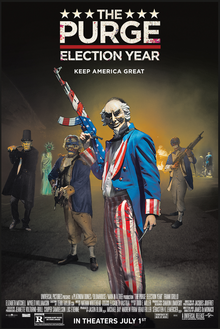
Image result for purge election yearThis film deals with politics and current affairs, as it is about a presidential candidate who is trying to eliminate the purge. Because of this conflict of opinion, during the purge, the population try to eliminate the candidate. This film was released around the time of the American election and could represent how people feel about Trump. This film, the most successful of the three in the franchise, would have been particularly topical due to the American election in November 2016. A film about an election would have resonated with the people at the time and helped boost audience allegiance and subsequently success. There are aspects in the film that suggest the purge is making America great and this is a dig at Trump's slogan.

Image result for Get Out

Get out (2017)
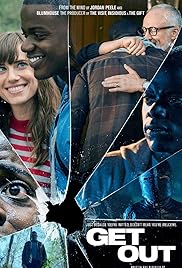
This is another good example of a film that tackles current affairs. It looks at the issues of racism by portraying it in a horror film. The villains in the film are not presented as stereotypical, as they have used middle class citizens, which the audience would not have expected. It is possible that this film could have been released after all the outrage that went down around police brutality targeting black people. The director of this film, Jordon Peele, spoke out about how he wants to make more horror films that reflect real social issues.


Our trailer
In our trailer, the social issue we tackled was how teenagers are seen to be rowdy, disruptive and a danger to society. Every generation thinks that teenagers and adolescents of their generation are troublesome, therefore this is a perennial theme. I think that if we were to film our opening again we should have included more up-to-date social issues such as sexual health, pregnancy and drug and alcohol use. For instance we could have possibly made a teenage girl who liked drinking become pregnant and this would cause a problem for her and she would have to overcome it. The fact that Trump also set a late abortion law could be portrayed in it as another social issue and current affair.


Friday, 23 June 2017

Genre in Trailers

What is genre?
A genre from a film is decided through their common conventions and they allow for audiences to easily choose films based on their interests. We commonly consider films in terms of their genre - the set of characteristics that distinguish, say, a Western from a Comedy or a Thriller. We recognise genres by their narratives or their themes, but also by their iconography, characters and certain stylistic elements. Some genres can overlap as they can include traits from more than one genre, so sub genres are created. For example a horrody is a movie with both comedy and horror traits.

Conventions of genres
Horror: They tend me be set in dark places, using low key lighting, or a city environment to make them seem realistic. For colour they tend to have a very dark colour throughout and have low pitch noises to create an eerie and tense atmosphere. There is usually some sort of fast pace editing to create suspense. Horror films always have a vulnerable and brave character.

Comedy: Focus on humour. Props used can vary and tend to be less predictive as they have different meanings. Alcohol is often used as it allows people to bring out their 'funny side'. Basic locations of comedies are schools or homes.

Romance: Stories tend to focus on passion and feelings towards two main characters and how their relationship builds. Most romance films seem to be set in a city or on beaches. They use everyday props because they are basic and combined with the location make it feel like home. Two main characters are generally male and female, who have never met and they fall in love.

Action: Consist of a person who has to overcome a challenge. Props tend to be guns, cars and helicopters, which normally mean actions films are high budget. Locations are normally in cities or other well populated areas. Tracking shots are frequently used and editing is fast pace to emphasise the situation.

Sci-fi: These films tend to be set in the future, an alternative timeline or an historical past that contradicts historical records. They can also be in space or in an alternate universe. They tend to have lots of close ups to show all the weird objects and alien creations. The narrative is normally a fight between good and evil. Futuristic props are used to create the setting and make it more 'believable'.

Iconography of genre:
Horror: Low key lighting, tense music or silence, breathing, abandoned house.
Comedy: Jokes, phallic images, sex, drugs, alcohol.
Romance: Roses, calm relaxed music, wine.
Action: Guns, cars, violence, gadgets, mission, busy city.
Sci-fi: Aliens, spaceship, planets, stars, robots.


Thursday, 25 May 2017

Progress: AS-A2

In this blog post I will be exploring the techniques I used in my AS opening and what I will do differently for my A2 film trailer. I will also analyse my progress from the preliminary task to my A2.

Creativity
From our preliminary task to our AS opening out creativity significantly improved. In our preliminary task we were just trying to get it completed and fulfill everything that was required. This is evident from watching and comparing the two videos. Our ideas became much more creative and professional as we progressed through the year. Our camera use and editing technique also improved which meant that we were able to make our opening more interesting through different editing and filming techniques. For A2 I hope that our creativity will improve even more and we will come out with a thrilling, unique and intriguing trailer.

Post production
Our post production really improved throughout our project. For our preliminary task we did very little editing as we were not really familiar with what we were doing and just wanted to get the task completed so we could move on to starting our opening. For our final opening we were much more ambitious with our post production, this was demonstrated by our wipe screen and showed that our post production and knowledge had improved and our willingness to experiment increased. Throughout the project we became much more familiar with the editing software like iMovie and were able to use it to its full extent. I am hoping that for A2 our skills will improve even more and we will become familiar with everything that we are able to do on iMovie. I will spend time learning and looking through iMovie to work out new post production techniques that can be used in our trailer to make it the best it can be.

Digital technology
For our preliminary task we used an iPhone to film it whereas we used a DLSR camera to film our opening, this meant that our preliminary was not the highest quality that it could have been. For our opening we used a microphone to record all our sounds so that it sounded more professional whereas for our preliminary we did not, this caused the sound to be quite muffled. So the technology we used became much more professional and advanced for our opening which allowed for it to be better quality. For our A2 I plan to use more advanced technology to allow us to create a trailer that looks as professional as it can be.

Real media conventions 
For the preliminary we didn't really look at any conventions of media. However for our final opening we looked much more into conventions which we would conform to, or go against, to create a contrast in our opening. For our A2 we can look at even more and analyse the effect of the different conventions to suit what will go with our trailer.

Research and planning
For our preliminary no research was carried out before filming and very little planning was done. For our opening we did many blog posts on research and planning as this was an important part of our AS. This is because we had to research what people liked and wanted to see from an opening like ours, planning was also important because we had to be organised and make sure we knew what we wanted to film and when. Doing all this allowed for our trailer to be more professional and completed to the best it could be. For our A2 we will do much more research and planning, I plan to complete research and planning to a much more detailed level then AS and plan everything thoroughly. Hopefully doing this will make it easier for us to be able to create a unique and slick trailer.